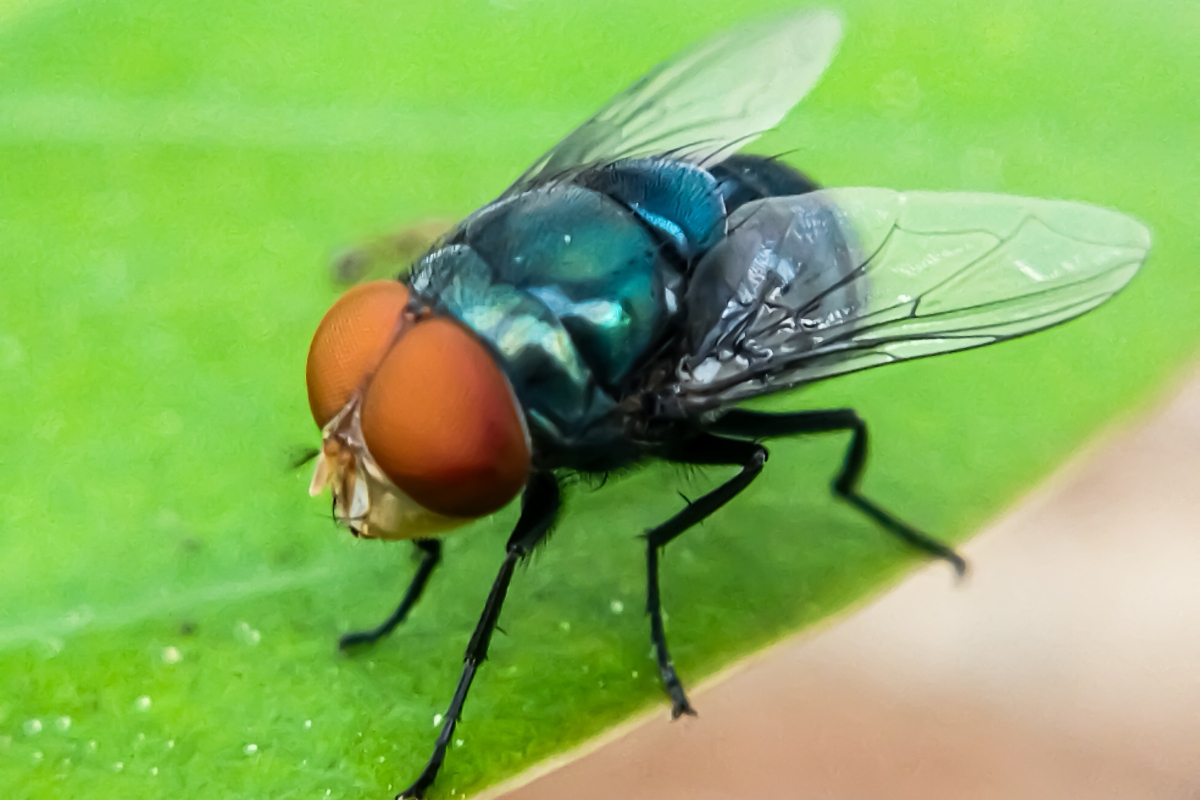
Springfield, IL (CAPITOL CITY NOW). — A flesh-eating pest that was eradicated from the United States decades ago is once again drawing concern from livestock producers as it moves north through Mexico and into parts of the southern U.S.
During an appearance on the WTAX Morning Newswatch, Farm Director Jeff Nalley discussed the growing threat posed by the New World screwworm, a parasitic fly that targets living animals and can cause significant damage to livestock.
“It’s an angry-looking fly,” Nalley said.
Unlike common flies that lay eggs in dead or decaying tissue, the New World screwworm seeks out living flesh. The pest lays eggs in open wounds, where the larvae hatch and burrow into healthy tissue.
“The fly looks for an open wound of a mammal,” Nalley said. “And this is not just cows. It could be deer, raccoons, opossums or any other animal that has an open wound. That’s where it will lay its eggs, and when that larvae hatch, it will dig down.”
Nalley described the insect as a “flesh-eating pest” that poses a serious production challenge for livestock operations.
The issue has been on the radar of the agriculture industry for years.
“U.S. agriculture has been talking about this for two years, sounding the warning alarm,” Nalley said. “Quite frankly, to the south of Mexico, I don’t think they treated it as seriously as we did.”
He said officials in affected regions failed to restrict animal movement and did not launch aggressive eradication efforts as the pest gradually spread northward.
The U.S. Department of Agriculture has implemented several measures to combat the screwworm, including quarantines and increased monitoring in affected areas. When a confirmed case is identified, officials establish a containment zone and intensify eradication efforts.
One of the most effective tools is a strategy first used successfully in the 1960s: releasing sterile male flies.
“The female mates once in its lifespan,” Nalley said. “They release literally millions of sterile males in the area. They find their girlfriend and nothing happens. There is no reproduction, and eventually you wipe out the species.”
A new USDA facility in Texas is expected to boost production of sterile flies, but Nalley said more are needed before the program can reach full effectiveness.
“The trouble is we need about 5 million flies, and we’re short of that,” he said. “Until we get up to that level of production, this thing can still hang around.”
The greatest concern currently remains in Texas and New Mexico, where livestock producers are being urged to closely monitor animals for signs of infection. Pet owners in those states are also being advised to watch for wounds that could attract the pest.
The screw worm’s ability to infest multiple animal species creates additional challenges, particularly if infected animals are transported to other parts of the country.
“If you’ve got a dog, cat, cow or horse that is infected with New World screwworm and you move it north into Illinois, Iowa or South Dakota, now you’ve migrated that fly further north,” Nalley said.
Some countries have already responded to the threat. Nalley noted that Canada has restricted imports of certain animals due to concerns about the pest.
Despite the challenges, Nalley remains optimistic that aggressive control efforts will prevent the screwworm from gaining a permanent foothold in the U.S.
“I can’t believe with the effort that we’re throwing at it that this thing is going to be able to perpetuate the way it did in Mexico,” he said. “We are taking it a lot more seriously than they did, and we are going about it the right way.”
Nalley emphasized that consumers should not be concerned about the safety of beef products.
“This is not mad cow disease. This is not anything that has any impact on the safety of beef. This is a production issue,” he said.
“There’s nothing wrong with your hamburger. There’s nothing wrong with your steaks or your roast or whatever else you like. This is not a food safety issue. This is an animal husbandry issue, and we are working on it.”