(CAPITOL NEWS ILLINOIS) – The overturn of Roe v. Wade four years ago has wrought numerous changes for Illinois’ abortion ecosystem, turning the state into a destination for tens of thousands of people across the United States who need abortion services.
Rising costs and a growing number of abortion restrictions nationwide have changed the types of care people need and the amount of money they need from financial aid groups. Now, Illinois advocates are preparing for a future where those needs continue to increase.
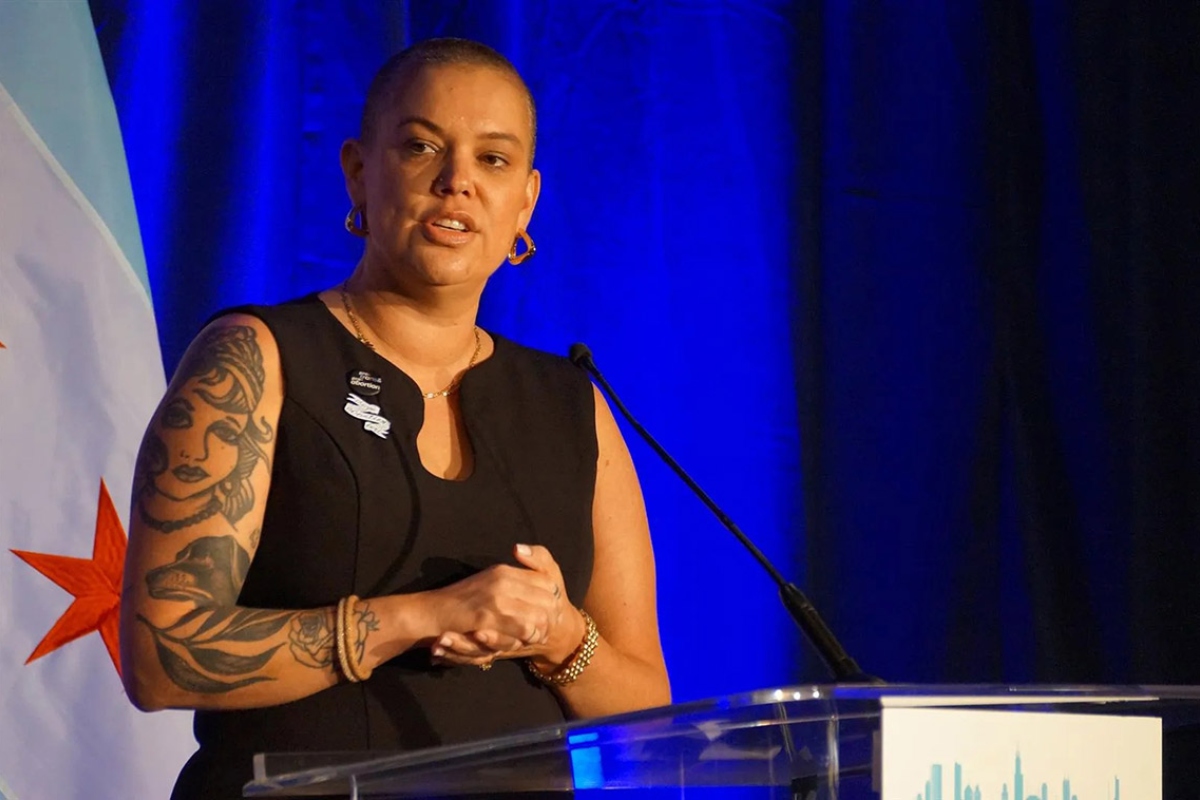
“Once everything from H.R. 1 (the One Big Beautiful Bill Act) goes into effect, people are going to have far less, so we’re not at the tip yet of what rising costs are going to mean,” Megan Jeyifo, the executive director of the Chicago Abortion Fund said during a press call last week.
The Chicago Abortion Fund, which provides financial, logistical and material assistance to abortion seekers, is the largest of its kind in the nation. Since June 2022, the fund has assisted more than 60,000 callers and distributed more than $25 million in direct support.
In 2025, about 13,760 people, or 43% of the nearly 32,000 people who came to Illinois from out-of-state, were given direct support from the fund, an increase from the 28% of callers who received that level of support in 2024, according to data released by the group.
“We are now working with people who have $0 to contribute to their own appointment because all of that money is going towards keeping food on the table, keeping the lights on, keeping their kids in daycare, making sure they have diapers,” Jeyifo said.
According to a 2026 Guttmacher Institute report, Illinois was the destination for nearly a quarter of the 142,000 total people who left their states for abortions in 2025. The Guttmacher Institute is an independent abortion policy research organization.
Jeyifo said abortion is a family issue — especially considering most abortion-seekers are already parenting at least one child — and a patient being denied an abortion affects that person’s whole family.
“Deciding whether to start or grow a family is a big decision in general, but it’s also really big decision right now when we have gas prices what they are, food prices what they are,” she said.
In February, Gov. JB Pritzker announced the Prairie State Access Fund, a public-private partnership managed by the Michael Reese Health Trust Fund to provide funding to clinics that need assistance with the number of out-of-state patients they care for. It doesn’t receive state funding but will raise money to address specific, immediate needs to support the clinics and other organizations that provide abortion care in Illinois.
‘Folks are afraid’
Allison Cowett, an OB-GYN and the chief medical officer of Family Planning Associates Medical Group in Chicago, said her clinic now sees more than 1,300 people a month in part because of the number of out-of-state patients.
“I’ll tell you, people are coming to Illinois, coming to Family Planning Associates, without any pre-care in their home state,” Cowett said. “Folks are afraid to have an ultrasound with a pregnancy documented in banned states.”
That fear is one reason why lawmakers this year passed a bill to shield abortion-related information from a patient’s digital medical records and forbid the sharing of that information with out-of-state entities unless the patient consents.
Andrea Gallegos, the executive administrator of the Alamo Women’s Clinic in Carbondale, said they’ve seen patients who travel to Illinois to confirm their pregnancies because people fear even buying pregnancy tests in states where abortion is banned.
“I would also add that the overwhelming number of crisis pregnancy centers in banned states that patients end up at before coming to us has also added a whole other layer of injustice,” she said.
Patients at those facilities are often misinformed about how far along their pregnancy is and what their options are, Gallegos said, because crisis pregnancy centers are often non-medical clinics that advertise services like ultrasounds and material help but also aim to dissuade people from seeking abortions.
Illinois providers have adapted to those changes, and some of those adjustments have been made possible because of investments from the state and local governments and the creation of the Illinois Abortion Access Collaborative. That’s a collection of figures in the Illinois abortion landscape that work together to strengthen the state’s ability to care for abortion-seekers.
One investment is the Complex Abortion Regional Line for Access, or CARLA, which was established by Illinois in 2023 as a collaboration between state agencies, the Chicago Abortion Fund and four hospitals. The program helps people who need hospital-based care.
‘Pushed into later gestational ages’
Laura Laursen, the co-director of CARLA and a complex family planning physician in Chicago, said the number of patients they see has increased because of abortion bans.
“As bans increase, people are being pushed into later gestational ages, and then, if you are farther along, you then have fewer clinics that can provide that (abortion) care, and the care is more expensive, so then you’re trying to get money and resources available, and the procedure can take longer, and the cycle just continues,” she said.
Complex abortion care is usually needed when the pregnant person has preexisting health issues — or develops health issues — that would threaten their life if the pregnancy continued. Conditions can include organ failure, cancer, severe heart issues and more. It’s also an option for pregnancies that involve fetal anomalies such as developmental problems with the brain and other organs.
“One of the biggest drivers of the complex care is that more patients are just coming to Illinois for care, and patients who used to be able to get this complex care in their home state are no longer able to get this complex care in their home state,” Laursen said.
“As we know, bans are not doing anything to reduce abortions. The overall number of abortions in this country has actually gone up since Dobbs. It’s just making care much more complicated and much more difficult to get,” she continued.
Capitol News Illinois is a nonprofit, nonpartisan news service that distributes state government coverage to hundreds of news outlets statewide. It is funded primarily by the Illinois Press Foundation and the Robert R. McCormick Foundation.